未分类 ·
港金IPO前配置:企业高管与高净值人士的财富避险新策略
港金IPO前配置:企业高管与高净值人士的财富避险新策略
In an era of heightened global economic uncertainty, geopolitical tensions, and volatile capital markets, the strategic allocation of gold has re-emerged as a cornerstone of wealth preservation. For corporate executives and high-net-worth individuals (HNWIs) with significant exposure to upcoming initial public offerings (IPOs), the period leading up to a listing presents unique financial risks—ranging from equity market fluctuations to currency depreciation. Among the various gold investment avenues, Hong Kong gold (港金), traded on the Chinese Gold and Silver Exchange Society (CGSE), offers a compelling pre-IPO hedging tool. This article explores, from the perspective of corporate leaders and affluent investors, how 港金 can serve as a hedge against market volatility and exchange rate risk, leveraging Hong Kong’s distinctive financial ecosystem to provide practical allocation strategies.
Understanding 港金: A Unique Gold Market
Hong Kong gold, commonly referred to as 港金, is physical gold traded in taels on the CGSE, one of the world’s oldest gold exchanges. Unlike the internationally standardized London gold (traded in troy ounces), 港金 is denominated in Hong Kong dollars per tael (approximately 37.429 grams), with a purity of 99% fineness. This local market operates with deep liquidity, tight spreads, and a regulatory framework that has evolved since 1910, making it a trusted venue for both institutional and individual investors.
The CGSE’s unique position stems from Hong Kong’s role as a global financial hub, where East meets West. The exchange offers both spot and deferred contracts, allowing participants to hedge or speculate on gold prices without taking physical delivery. For HNWIs and corporate executives, 港金 provides a direct, transparent, and tax-efficient way to gain exposure to gold, often with lower premiums compared to retail gold products. Importantly, the market’s operating hours overlap with both Asian and European sessions, enabling real-time responses to global events—a critical feature for those managing pre-IPO wealth.
The Pre-IPO Wealth Conundrum: Risks Facing Executives and HNWIs
Corporate executives and early-stage investors often hold a substantial portion of their net worth in company equity, which becomes liquid only after an IPO. The period between the decision to go public and the actual listing can span months or even years, during which the company’s valuation is subject to market sentiment, sector trends, and macroeconomic shocks. A sudden market downturn—such as the 2022 tech sell-off or the 2023 banking turmoil—can erode the anticipated value of an IPO, directly impacting the wealth of stakeholders.
Moreover, many Hong Kong IPOs attract international investors, meaning that the listing currency (often HKD or USD) may be mismatched with the executive’s base currency. For instance, a mainland Chinese entrepreneur whose wealth is tied to a Hong Kong-listed entity faces currency risk if the renminbi appreciates against the Hong Kong dollar. The HKD’s peg to the USD adds another layer: while it provides stability, it also exposes holders to US monetary policy shifts. In 2023, the Federal Reserve’s aggressive rate hikes strengthened the USD, but also increased volatility in emerging market currencies, including the offshore renminbi. For HNWIs diversifying out of concentrated equity positions, gold’s historical role as a non-correlated asset becomes particularly attractive.
Gold’s negative correlation with equities during periods of stress is well-documented. According to the World Gold Council, during the 2008 financial crisis, gold prices rose by 5.5% while the S&P 500 fell by 37%. More recently, in 2022, when global stocks declined by nearly 20%, gold held its value, ending the year flat in USD terms. For pre-IPO shareholders, allocating a portion of their soon-to-be-liquid wealth into gold can act as a portfolio insurance, reducing overall volatility and preserving capital for post-IPO reinvestment or consumption.
Why 港金? Hong Kong’s Comparative Advantages as a Gold Hub
Hong Kong’s status as a premier gold trading center is underpinned by its free flow of capital, robust legal system, and proximity to mainland China—the world’s largest gold consumer. The following factors make 港金 an ideal pre-IPO hedging instrument:
-
Regulatory Certainty and Market Integrity: The CGSE is regulated under Hong Kong’s Securities and Futures Ordinance, ensuring transparency and investor protection. Unlike some offshore gold markets, 港金 transactions are subject to strict anti-money laundering (AML) and know-your-customer (KYC) protocols, providing peace of mind for HNWIs concerned about the provenance of their assets.
-
Tax Efficiency: Hong Kong imposes no capital gains tax, no value-added tax (VAT) on gold investment, and no stamp duty on physical gold transactions. This compares favorably with jurisdictions like India or mainland China, where gold imports attract duties. For a corporate executive liquidating IPO shares, the after-tax returns from gold investments can be significantly higher.
-
Currency Hedging: The HKD-denominated 港金 allows investors to hedge against HKD depreciation without converting into foreign currencies. Since the HKD is pegged to the USD within a narrow band (7.75-7.85), holding gold in HKD terms effectively provides a hedge against both USD weakness and HKD de-pegging tail risks. In 2023, as geopolitical concerns heightened, some HNWIs shifted assets into gold as a safeguard against potential disruptions to the peg, even though such a scenario remains unlikely.
-
Liquidity and Physical Settlement: The CGSE’s electronic trading platform offers deep liquidity, with daily volumes often exceeding 10,000 taels. Moreover, investors can take physical delivery of gold bars through accredited members, a feature valued by those seeking tangible assets outside the banking system. During the COVID-19 pandemic, physical gold demand surged in Hong Kong as a safe haven, with premiums over spot prices widening due to logistical disruptions—yet the CGSE maintained orderly trading.
-
Integration with Wealth Management Ecosystem: Hong Kong’s private banks and wealth managers routinely incorporate gold-linked products into their offerings. Executives can use 港金 as collateral for lombard loans, or include it in discretionary portfolios managed by institutions like UBS or HSBC, which have deep roots in the city.
Strategic Allocation: How to Integrate 港金 into Pre-IPO Planning
For corporate executives and HNWIs, the decision to allocate to 港金 should be part of a broader pre-IPO wealth management strategy. The following steps outline a practical approach:
Assessing Risk Exposure and Time Horizon
The first step is to quantify the equity concentration risk and the timeline to liquidity. An executive expecting to sell shares six months post-IPO might have a different risk profile than one planning to hold for years. A typical recommendation is to allocate 5% to 15% of the anticipated IPO proceeds to gold, depending on the individual’s risk tolerance and market outlook. For example, in 2023, a tech founder with a tentative IPO in 2024 might have increased gold allocation given the sector’s volatility and rising interest rates.
Choosing the Right 港金 Instrument
Investors can access 港金 through several channels:
| Instrument | Description | Pros | Cons |
|---|---|---|---|
| Physical Gold via CGSE Members | Purchase of 99% fine gold taels from authorized dealers, stored in secure vaults. | Direct ownership, no counterparty risk, tangible asset. | Storage and insurance costs, lower liquidity for large sales. |
| Gold Accumulation Plans (GAPs) | Offered by banks like Bank of China (Hong Kong), allowing regular investment in gold at average prices. | Dollar-cost averaging, low minimums, convenient. | Not suitable for large lump-sum allocations, management fees may apply. |
| Gold ETFs Listed in Hong Kong | Exchange-traded funds such as the SPDR Gold Shares (2840.HK) or the Value Gold ETF (3081.HK). | High liquidity, low cost, easy to trade via stock accounts. | No physical delivery, management fees (0.1%-0.4%), tracking error. |
| Gold Futures and Options on CGSE | Derivative contracts for hedging or speculation. | Leverage, ability to lock in prices. | Complexity, margin requirements, risk of loss beyond initial investment. |
For most HNWIs, a combination of physical gold for core holdings and gold ETFs for tactical adjustments offers a balanced approach. The SPDR Gold Shares, for instance, had over USD 57 billion in assets globally as of early 2024, with the Hong Kong-listed share class providing HKD-denominated exposure.
Timing the Allocation
Rather than waiting until IPO proceeds are in hand, executives can begin building gold positions as soon as the IPO timeline firms up. This might involve:
- Pre-IPO Hedging: Using personal funds or margin to purchase 港金 futures or ETFs, locking in a gold price before the equity market event. If the IPO is delayed or repriced lower, the gold position may appreciate, offsetting some of the equity loss.
- Post-IPO Diversification: Immediately after the lock-up period expires, converting a portion of shares into gold to reduce single-stock risk. This is particularly relevant for executives who have a low cost basis and face significant capital gains.
Tax and Estate Planning Considerations
Hong Kong’s tax neutrality makes gold an efficient vehicle for wealth transfer. Physical gold can be gifted or bequeathed without triggering inheritance tax (which Hong Kong abolished in 2006). For HNWIs with cross-border families, holding gold in a Hong Kong trust or a family office structure can provide asset protection and facilitate succession planning. A 2023 survey by Deloitte indicated that 42% of Asian family offices planned to increase allocations to gold and other real assets, citing geopolitical diversification.
Case Study: A Hypothetical Pre-IPO Allocation in 2023
Consider Mr. Li, a 48-year-old CFO of a biotech firm planning to list on the Hong Kong Stock Exchange in mid-2024. His net worth is heavily concentrated in company shares, valued at approximately HKD 80 million pre-IPO. Concerned about market volatility—especially after the 2023 banking crisis and ongoing US-China tensions—he decides to hedge 10% of his expected wealth.
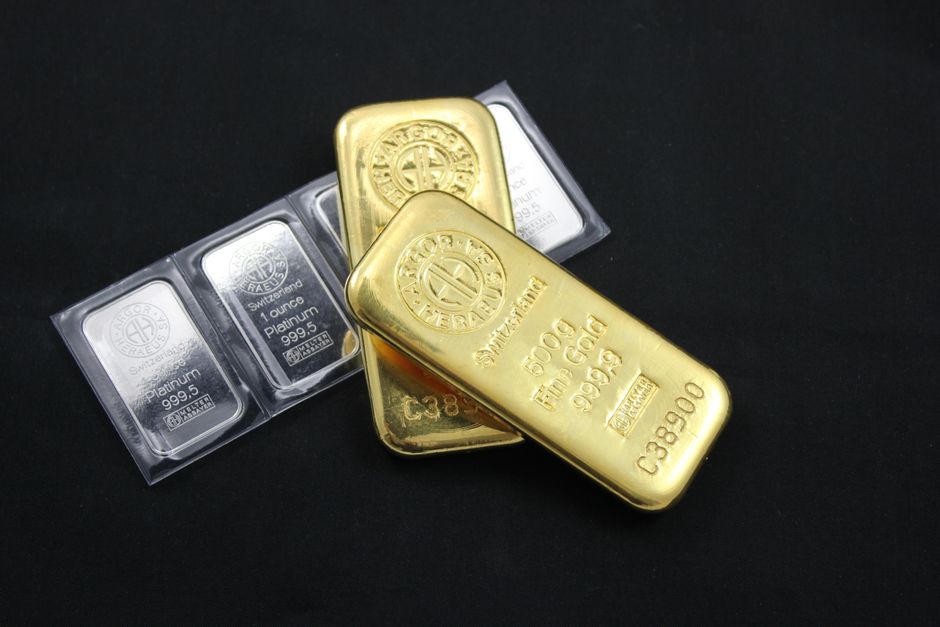
In October 2023, when gold was trading at around HKD 14,500 per tael, Mr. Li allocates HKD 8 million to a mix of physical 港金 (60%) and the Value Gold ETF (40%). By April 2024, gold has risen to HKD 16,200 per tael, a gain of 11.7%, while his company’s pre-IPO valuation has slipped by 5% due to sector headwinds. The gold profit of approximately HKD 936,000 partially offsets the notional equity loss, providing emotional and financial comfort as the IPO approaches. Moreover, the physical gold held in a Hong Kong vault serves as a liquid, crisis-proof reserve.
This example, while simplified, illustrates the smoothing effect of gold on a portfolio facing event risk.
Risks and Limitations of 港金 as a Hedge
While 港金 offers many advantages, it is not without risks:
- Price Volatility: Gold itself can be volatile. In 2013, gold fell by 28%, and in 2021, it declined by 3.5% despite inflationary fears. An ill-timed allocation could result in losses.
- Currency Mismatch: For investors whose base currency is not HKD, holding HKD-denominated gold adds a layer of currency risk. A strengthening HKD could erode returns when converted back to the home currency.
- Liquidity of Physical Gold: While the CGSE market is liquid, selling large physical bars may require time and incur assay costs if the bars are not in recognized good delivery form.
- Counterparty Risk: In ETF or futures structures, investors rely on the solvency of the issuer or clearinghouse. Although highly regulated, these are not risk-free.
- Regulatory Changes: Hong Kong’s political landscape has evolved since the implementation of the National Security Law. While the financial system remains robust, some investors factor in tail risks related to capital controls or sanctions, which could affect gold trading.
The Broader Context: Gold’s Role in 2023-2026 Portfolios
Looking ahead, several factors support a continued role for gold in pre-IPO strategies:
- Central Bank Buying: In 2022 and 2023, central banks purchased record amounts of gold—over 1,000 tonnes annually—as a reserve diversification strategy away from USD assets. This trend, led by the People’s Bank of China and others, provides a structural floor for gold prices.
- Geopolitical Uncertainty: From the Russia-Ukraine conflict to US-China technology decoupling, geopolitical risks are elevated. Gold historically outperforms during such periods.
- Inflation and Interest Rates: While real yields are a key driver, gold’s resilience in 2023 despite high nominal rates suggests that investment demand remains strong. The World Gold Council’s 2024 outlook projects a range of USD 1,900-2,200 per ounce, with upside risks if central banks pivot to easing.
- Hong Kong’s Strategic Position: As the Greater Bay Area initiative deepens financial integration, Hong Kong’s gold market could see increased flows from mainland investors seeking offshore diversification. The Wealth Management Connect scheme, expanded in 2024, may eventually include gold products, broadening the investor base.
FAQ
How does 港金 differ from international gold prices?
港金 is quoted in HKD per tael, while international gold (XAU) is quoted in USD per troy ounce. The price relationship is influenced by the USD/HKD exchange rate and local supply-demand factors. Typically, 港金 tracks the international price closely, with a small premium or discount reflecting physical market conditions.
Can non-Hong Kong residents invest in 港金?
Yes, non-residents can open accounts with CGSE member firms or purchase gold ETFs listed on the Hong Kong Stock Exchange. However, they must comply with KYC and AML requirements, and may need to consider tax implications in their home jurisdictions.
What is the minimum investment for physical 港金?
Physical gold bars on the CGSE typically start at one tael (around 37.4 grams), which at early 2024 prices is approximately HKD 16,000-17,000. Smaller investors can use gold accumulation plans, which allow monthly investments of as little as HKD 1,000.
Is 港金 a better hedge than USD-denominated gold for Hong Kong IPOs?
For investors with HKD-denominated liabilities or those planning to spend proceeds in HKD, 港金 eliminates currency conversion risk. If the IPO is in HKD, holding gold in the same currency provides a direct hedge. However, if the investor’s base currency is USD or another foreign currency, they might prefer internationally traded gold to avoid HKD exposure.
How liquid is the 港金 market during crises?
The CGSE has a history of maintaining liquidity even during severe stress, such as the 1997 Asian financial crisis and the 2008 global financial crisis. However, physical delivery may face logistical delays, and bid-ask spreads can widen. Electronic trading and gold ETFs offer more immediate liquidity.
References
- World Gold Council. (2023). Gold Demand Trends Full Year 2023. Retrieved from https://www.gold.org/goldhub/research/gold-demand-trends/gold-demand-trends-full-year-2023
- Chinese Gold and Silver Exchange Society. (2024). About CGSE. Retrieved from https://www.cgse.com.hk/en/about.php
- Hong Kong Monetary Authority. (2023). Linked Exchange Rate System. Retrieved from https://www.hkma.gov.hk/eng/key-functions/money/linked-exchange-rate-system/
- Deloitte. (2023). Family Office Insights Series: Gold and Real Assets. Retrieved from https://www.deloitte.com/global/en/Industries/financial-services/perspectives/family-office-insights-gold-real-assets.html
